123-456-7890

hellocallcenter@gmail.com

123 Anywhere St., Any City, 12345
Vascular trauma refers to injuries affecting the blood vessels, including arteries, veins, and lymphatic vessels, often resulting from accidents, penetrating injuries, blunt force trauma, or medical procedures. These injuries can cause life-threatening bleeding, loss of blood flow to vital organs or limbs, and permanent disability if not treated promptly. Rapid assessment, expert diagnosis, and immediate surgical intervention are critical to save lives, restore circulation, and preserve function.
Vascular trauma care involves the emergency evaluation, diagnosis, and treatment of injuries to blood vessels. These injuries can range from minor cuts to major arterial ruptures, crush injuries, or iatrogenic trauma (caused by medical procedures). The primary goals are to control bleeding, restore blood flow, repair damaged vessels, and prevent complications such as compartment syndrome, thrombosis, or limb loss.
At Nandan Vascular Center, we provide comprehensive vascular trauma and emergency care with a dedicated team of vascular surgeons available 24/7. Our center is equipped with state-of-the-art facilities to manage all types of vascular emergencies, from blunt and penetrating trauma to iatrogenic injuries, ensuring rapid intervention, optimal outcomes, and the highest standards of patient safety.
Vascular injuries can be classified based on their mechanism, location, and severity. Understanding the type of injury is essential for determining the most appropriate emergency treatment approach.
Caused by sharp objects such as knives, glass, bullets, or shrapnel that pierce the blood vessel wall. These injuries often require emergency surgical repair and may be associated with significant bleeding and damage to surrounding structures.
Resulting from forceful impact without penetration, such as motor vehicle accidents, falls, or crushing injuries. Blunt trauma can cause vessel tearing, dissection, or thrombosis, leading to reduced blood flow to vital organs or limbs.
Injuries that occur during medical procedures such as catheterization, angiography, dialysis access, or surgical interventions. These injuries require prompt recognition and expert management to prevent complications.
An abnormal connection between an artery and vein that develops after trauma, causing altered blood flow and potential complications. Surgical repair is often required to restore normal circulation.
A serious complication of trauma where increased pressure within a muscle compartment compromises blood flow and nerve function. Emergency fasciotomy is required to prevent permanent tissue damage and limb loss.
Recognizing the signs of vascular trauma is critical for prompt emergency care. Immediate medical attention is essential when any of these signs appear.
Vascular trauma can result from a wide range of incidents. Understanding the causes helps in prevention and rapid recognition of potential vascular injuries.
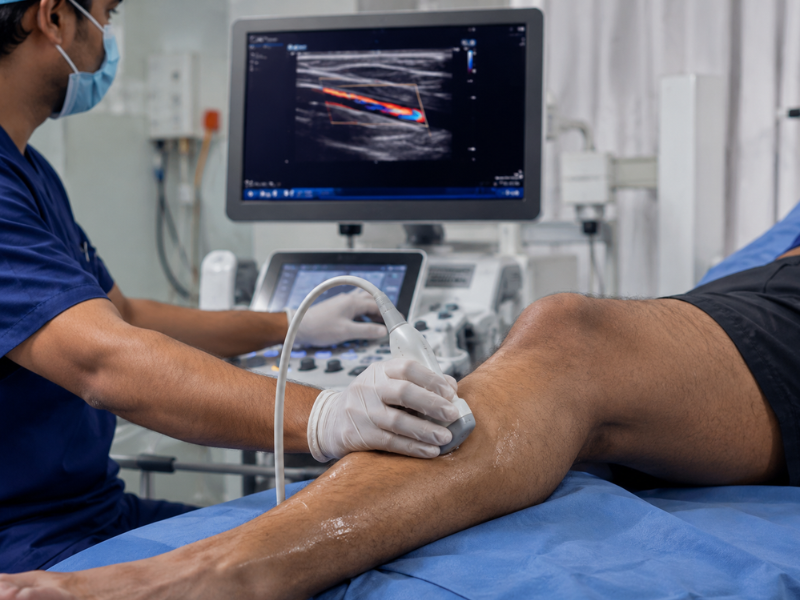
Rapid diagnosis is essential in vascular trauma. At Nandan Vascular Center, we use a comprehensive approach to evaluate vascular injuries in emergency settings: Physical Examination – assessment of pulses, capillary refill, and neurological function, Ankle-Brachial Index (ABI) – a quick test to evaluate blood flow to the extremities, Color Doppler Ultrasound – rapid, portable imaging to assess blood flow and detect vessel injury, CT Angiography (CTA) – detailed imaging for stable patients to precisely identify the location and severity of vascular injury, Digital Subtraction Angiography (DSA) – the gold standard for precise vascular imaging, used when endovascular intervention is planned.
Vascular trauma treatment requires a multidisciplinary approach aimed at controlling bleeding, restoring blood flow, and preserving function. We offer comprehensive emergency care tailored to each patient's condition.
Immediate measures to stop life-threatening bleeding, including direct pressure, tourniquet application, and surgical exploration to control bleeding vessels.
Surgical repair of damaged vessels using techniques such as primary repair, patch angioplasty, interposition grafting, or bypass grafting to restore blood flow.
Minimally invasive techniques such as stent-graft placement, balloon angioplasty, or embolization to control bleeding or repair vessel injury without open surgery.
Emergency surgical release of muscle compartments to relieve pressure, restore blood flow, and prevent permanent tissue damage or limb loss.
Combined surgical and endovascular approaches to preserve limbs at risk of amputation due to severe vascular injury and tissue ischemia.
Comprehensive post-operative care including wound management, physical therapy, and long-term monitoring to optimize recovery and functional outcomes.
Untreated or improperly managed vascular trauma can lead to serious complications. Prompt, expert care is essential to prevent these outcomes.
We provide comprehensive, round-the-clock vascular trauma and emergency care with a focus on rapid intervention, limb preservation, and optimal functional recovery.
Our specialists perform rapid clinical evaluation supported by Doppler Ultrasound, CT Angiography, and advanced imaging to accurately identify arterial and venous injuries. Immediate diagnosis enables prompt treatment, reduces blood loss, and improves patient survival and limb preservation.
We perform advanced vascular repair, bypass surgery, vessel reconstruction, and minimally invasive endovascular procedures to restore normal blood circulation. Our experienced surgeons work quickly to control bleeding, repair damaged vessels, and prevent life-threatening complications.
Every emergency case receives a personalized treatment strategy focused on restoring circulation, preserving limb function, and preventing permanent tissue damage. Our multidisciplinary team provides coordinated care to achieve the best possible outcomes in complex vascular emergencies.
Following emergency treatment, we provide comprehensive postoperative monitoring, wound management, rehabilitation guidance, and regular vascular follow-up to ensure optimal healing. Our long-term care plans help patients recover safely while reducing the risk of future vascular complications.
Complete the form below and our team will contact you to confirm your appointment.

32/2/9, Ratnamamba Street,
Padmaja Clinic,
Mogalrajapuram,
Christurajupuram,
Vijayawada - 520010
Monday - Saturday
9:00 AM - 7:00 PM